The Belvedere Gardens are worth visiting for a free architectural walk, particularly when you want palace views without buying another museum ticket. The main gardens connect the Upper and Lower Belvedere, but neither the art collections nor every enclosed garden is included. Choose the outdoor visit for the setting; buy a separate admission when the collection is your main reason to come. [1][2]
What the free visit actually includes
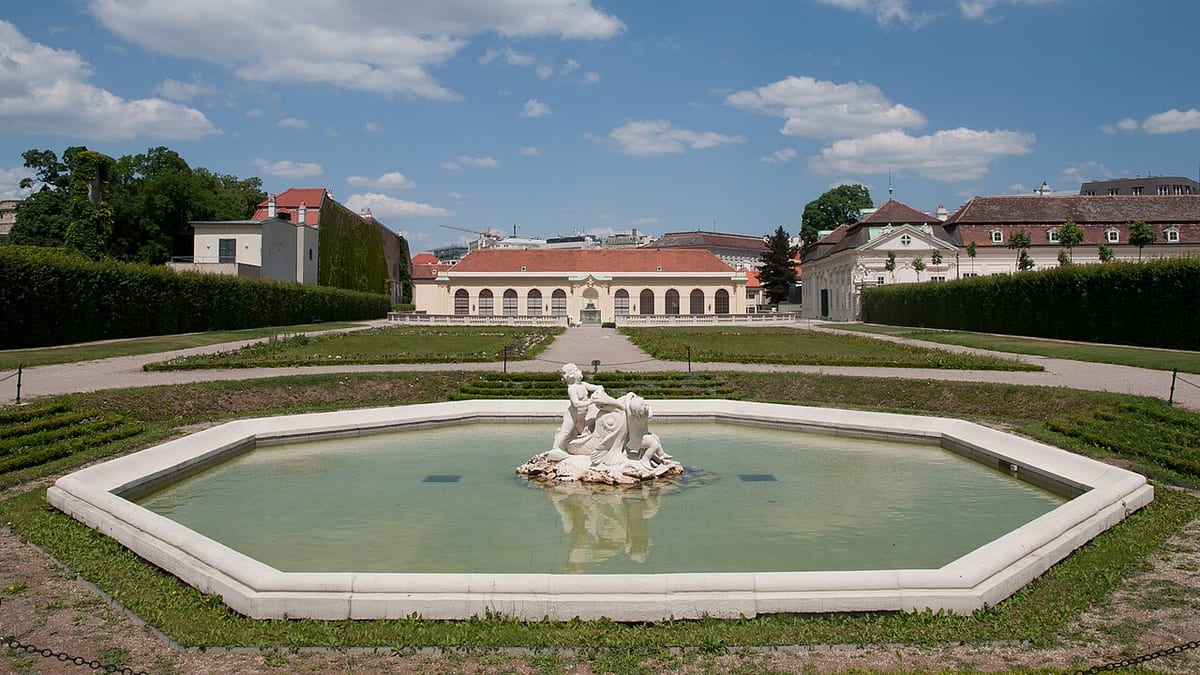
The strongest reason to come is the relationship between buildings, water and changing levels. The formal garden stretches across three terraces between the two palaces, while the reflection pool south of the Upper Belvedere supplies a different, more symmetrical view. The garden is a French Baroque composition associated with Dominique Girard, rather than an informal park that happens to contain a palace. [1]
That distinction suggests how to enjoy it. Walk through the sequence instead of stopping at the first photograph. Look back after changing terraces: the proportions of the palace and the depth of the garden become easier to appreciate from several positions. For a visitor more interested in architecture than painting, that outdoor experience can justify the detour by itself.
Do not confuse the free main garden with the Privy Garden at the Lower Belvedere. The museum identifies that as an area accessed with a valid Lower Belvedere ticket through the Marble Gallery. The Belvedere 21 sculpture garden is another separate space, with access tied to its own arrangements and weather conditions. "The gardens are free" is therefore useful shorthand only when the particular garden is clear. [1]
The palace façades do not provide a free route into the museum galleries. Upper Belvedere admission is a separate purchase for the art collection, including Klimt's The Kiss. Anyone who would be disappointed to leave without seeing that painting should arrange the museum visit first and treat the garden as the flexible part of the day. [2][3]
Choose your route around your next destination
For a straightforward visit, I recommend starting near the Upper Belvedere and walking towards the Lower Belvedere. This makes the garden's descending sequence part of the experience and avoids repeatedly retracing the same central route. It is a planning preference, not the only correct entrance or a guarantee that every individual path is step-free.
The museum lists tram D at Schloss Belvedere among its useful public-transport approaches. Quartier Belvedere and the Hauptbahnhof area offer other starting points, but they are not interchangeable doors into the same building. Enter the actual palace or garden entrance in your map rather than simply navigating to "Belvedere" and assuming the last stretch will be obvious. [2]
At the top, begin with the southern reflection pool before committing to the north–south garden walk. Otherwise, it is easy to reach the Lower Belvedere and realise that the photograph you wanted was behind your original starting point. From the lower end, continue towards your next city-centre activity rather than making a second palace visit compulsory.
Allow roughly an hour for an unhurried outdoor circuit, or longer when photography and sitting are important. This is an editorial allowance, not a measured average. A twenty-minute dash can produce a view; it is less successful when the purpose is to enjoy the composition or give a mixed-interest group a relaxed break between museums.
For anyone with limited stamina, identify one arrival point, one terrace or viewpoint and a clear return journey. A smaller visit is preferable to reaching the far end exhausted. Ask the museum about the most suitable current access route when steps, gradients or surface conditions would materially affect the visit.
The season changes the value, not just the photograph
The published garden timetable changes through the year. The main gardens close earlier in winter than in summer; November to February hours are 07:00–17:30, while the May–August schedule extends to 21:00. These are garden hours, not permission to enter the museum at the same time. Dogs and other pets are not permitted in the palace gardens. [1]
In summer, an outdoor visit can be separated from a museum booking by several hours. An early walk followed by a different activity, or a later garden visit after the galleries, may feel less compressed than doing everything in one block. In winter, put the garden into the daylight portion of the itinerary rather than assuming it works as an after-dinner stroll.
Do not buy a trip on the expectation of a particular fountain display or a photograph filled with flowers. Planting, maintenance and weather affect the appearance. The dependable reason to visit is the layout and architecture; seasonal colour is an additional pleasure rather than the entire proposition.
On a wet or windy day, a long garden circuit may be less attractive than a focused look before the museum. Conversely, on a clear day when you have already spent hours inside, the free grounds can be the better choice than adding another paid gallery simply because it is nearby.
Add the botanical garden only for a different experience
The adjacent University of Vienna Botanical Garden is a separate institution with its own opening calendar. Entry is free, but winter closures, weather-related restrictions and gate times differ from those of the Belvedere. Its published annual closure includes 24 December to 6 January. A connecting gate should not be treated as evidence that both sites share one timetable. [4]
Combining them makes sense when plants are a genuine interest. The formal palace garden and a botanical collection answer different questions: one is about a designed vista, the other about looking more closely at living collections. Leave time to slow down rather than using the botanical garden merely as an elaborate shortcut.
For a short first visit to Vienna, however, there is no obligation to add it. A satisfying palace-garden walk followed by lunch can be a better use of time than collecting another entrance. The same applies to Belvedere 21: add contemporary art because you want that programme, not because the shared name suggests that it belongs to one mandatory circuit.
When another attraction is the better choice
Choose the Belvedere Gardens when you value a low-cost stop, exterior architecture and an outdoor interval within a cultural itinerary. They are especially useful for companions who disagree about how many museums to visit: everyone can share the garden, while the art-focused visitor books the galleries separately.
Choose the museum instead when seeing specific artworks is the priority. Choose a more extensive park outing when the main aim is a long recreational walk. The Belvedere works best when assessed on its own strengths, rather than judged as a substitute for every palace, museum and green space in Vienna.
A good final test is to ask what would make the visit successful. If the answer is "an attractive hour outside with two remarkable palace façades," the free garden is an excellent fit. If it is "Klimt, furnished imperial rooms and every private enclosure," clarify the actual collections and tickets before arriving. The name of a palace complex is not a description of everything one admission includes. [2][3]