The Imperial Carriage Museum is worth visiting when you want a focused look at Habsburg ceremony, craftsmanship and Empress Elisabeth rather than another sequence of palace rooms. It works especially well as a deliberate addition to Schönbrunn. Reserve a timed entry: since April 1, 2026, admission requires a booked time slot, even though the visit itself has no fixed duration. [1]
Why carriages tell a different imperial story
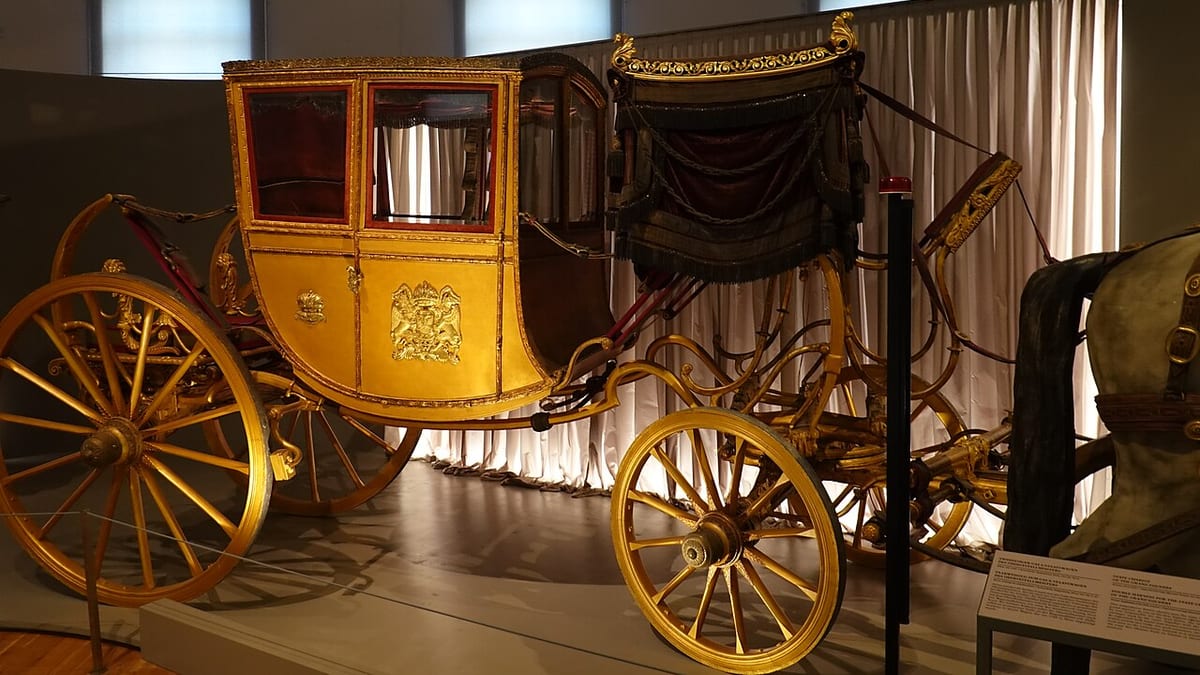
The collection is not simply a garage full of ornate vehicles. Court carriages expressed rank, ceremony and the public image of the monarchy, while other vehicles served travel, work, leisure and children. The museum preserves part of a fleet that once included more than 600 vehicles; that historical fleet size is not the number of carriages visitors should expect to see on display. [2]
Look beyond the gold decoration. Compare the passenger compartment, the visibility of the occupants and the relationship between comfort and display. A ceremonial vehicle had a different job from a practical traveling carriage. The contrast makes the collection interesting even if you have little prior knowledge of transport history.
The operator explains that nineteenth-century court vehicles used a recognizable green-and-gold appearance, with details indicating the rank of the occupant. Such choices turn apparently decorative features into a system of communication. You are looking at how power was made visible in the street, not only at expensive craftsmanship. [2]
For travelers who have already toured imperial apartments, this is the museum's strongest argument. It adds movement, public ceremony and practical travel to a story otherwise told through interiors. For someone with no interest in court life or historic vehicles, however, it remains a specialist collection rather than an essential stop for every visitor.
Follow Elisabeth through objects rather than a screen image
The museum's Elisabeth presentation connects ceremonial carriages with more personal objects, including riding equipment and vehicles associated with her children and travels. The official description also identifies the travel landaulette used in Geneva before her assassination and the black hearse associated with her final journey. [3]
These objects offer a useful counterweight to a purely glamorous portrait of "Sisi." A carriage can show the public role expected of an empress, while a saddle or practical traveling vehicle suggests a different set of interests and constraints. Give those contrasts time rather than treating every exhibit as another decorative background.
Do not assume that an Elisabeth-themed ticket means entry to every attraction in Vienna connected with her. The museum's named combined ticket links the Imperial Carriage Museum with the Imperial Treasury. It is not a universal Sisi pass, and the Treasury visit is a separate outing rather than another room inside this museum. [1][3]
Before buying the combination, decide whether you actually want both collections. A package is useful when it matches a real itinerary, not when it persuades you to add a second museum merely to justify a perceived saving. Keep the names of the included institutions in your booking notes to avoid confusing similar imperial branding.
Timed admission changes how to combine the visit with Schönbrunn
The museum publishes daily opening hours, with a shorter winter schedule beginning December 1. More importantly, admission has used reserved time slots since April 2026. A timed ticket controls when you enter; the operator explicitly says it does not impose a time limit on your visit once inside. [1]
Place this booking around any other fixed appointment you already have. If your main priority is a palace tour, keep a sensible gap between the two entrances rather than assuming that every attraction on the estate is adjacent. Conversely, visitors particularly interested in the carriages may prefer to visit them first, while concentration is fresh.
Allow roughly an hour as a starting planning allowance for a focused visit, and longer when using an audio guide or reading closely. That is an editorial estimate, not the museum's promised completion time. The value of a compact collection is that you can slow down without feeling obliged to complete an entire large palace complex afterward.
The published standard adult price is €12 online compared with €14 on site, and admission for visitors aged nineteen and under is free. The listed audio guide costs an additional €2 and includes English among its languages. Reserve the correct ticket category and do not mistake free admission for freedom from the timed-entry arrangement. [1]
Who will enjoy it most?
Travelers interested in design can focus on construction and ornament. Compare a vehicle intended to project status with one intended to move a family more practically. Notice what would make entry, seating or travel comfortable, and what instead makes the occupants conspicuous. These are useful questions even without specialist vocabulary.
With children, use a small number of comparisons rather than reading every label aloud. Ask which carriage they would choose for a long journey, which looks hardest to climb into and which seems intended for a very public occasion. Keep the conversation grounded in what is actually visible rather than inventing stories about particular passengers.
For Elisabeth enthusiasts, the museum provides a clear reason to travel beyond the familiar portrait and costume imagery. For visitors choosing between several imperial attractions, it is best regarded as a focused supplement, not a replacement for a palace interior or a general introduction to Austrian history. The collection's appeal is specific, and the visit is better when you acknowledge that.
Access and luggage deserve attention before arrival
The published mobility information is precise: the main entrance has a low step of about three centimeters; the ground-floor galleries are accessible, while the first-floor galleries are reached by stairs. Accessible toilets are outside the collection and use a Eurokey lock. Visitors needing a fully step-free experience should discuss the usable route before booking. [4]
This is not a reason to dismiss the collection automatically. It is a reason to establish which displays you can reach and whether those include your main interests. A partly accessible museum can still be worthwhile, but the limitation should be understood in advance rather than discovered at the staircase.
The museum does not provide a cloakroom suitable for bulky luggage, although lockers are available for backpacks. Leave suitcases elsewhere instead of building the visit into a transfer day without a storage plan. Private photography is generally permitted subject to the museum's restrictions, including no flash or tripod and any object-specific prohibition. [1]
Choose the Imperial Carriage Museum when the objects themselves interest you and when you can give them an unhurried hour or more. Its strength is the way a relatively focused collection connects craftsmanship, ceremony and individual lives. It is a rewarding addition to Schönbrunn when selected for that reason, rather than an extra admission purchased simply because the entrance happens to be nearby.