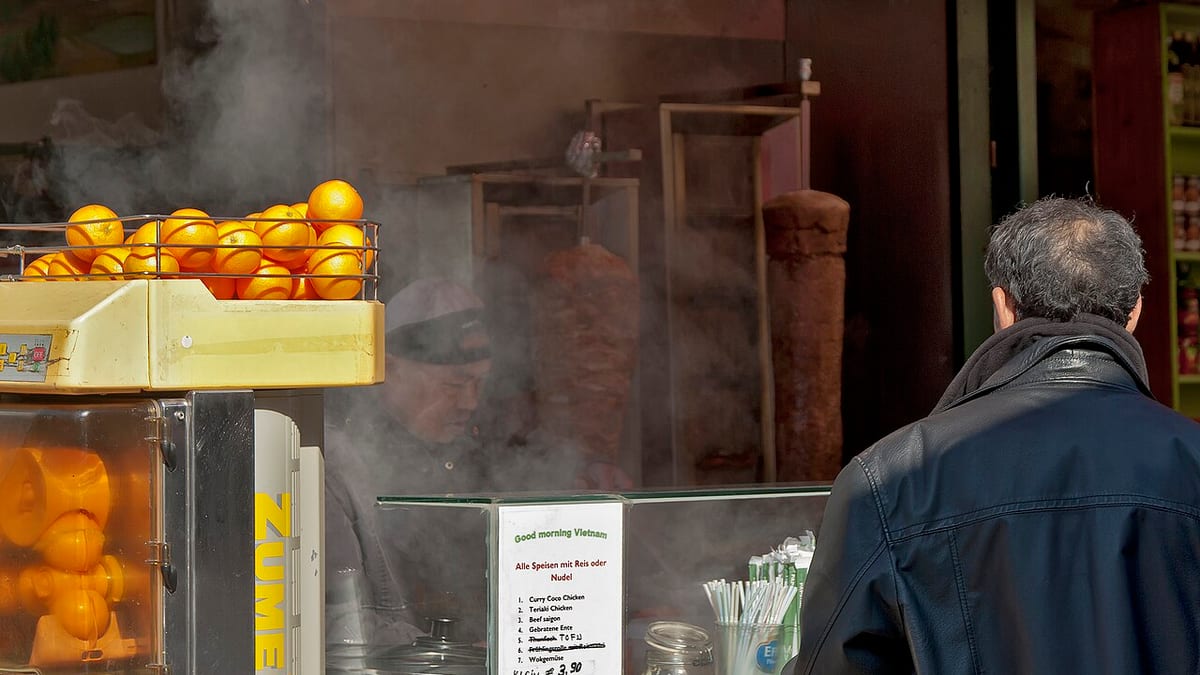
Naschmarkt is worth visiting for food browsing, a deliberately chosen meal or the Saturday flea market, but those are three different experiences. Go during market-trading hours when you want the stalls; a Sunday restaurant visit is not the same thing as seeing the full food market. Treat it as a lively commercial place, not a guarantee that every purchase is cheap or uniquely Viennese. [1][2]
Decide which Naschmarkt you are coming for
The market brings together food stalls and restaurants with a broad international range. Vienna's tourism board presents it as a place for both shopping and eating, rather than a market devoted exclusively to traditional Austrian produce. That variety can be its appeal, provided it matches what you expected. [2]
For a curious first-time visitor, browsing is a useful introduction. Look at what is being sold, compare a few stands and stop when something genuinely interests you. You do not need to turn every offer of a sample into a purchase or every attractive counter into a full meal.
For someone who wants ingredients for an apartment stay, the questions are more practical: quantity, storage, price and whether the product fits the meal you intend to make. A basket of interesting food is less useful if it cannot be carried comfortably or kept appropriately until you return.
For a restaurant visit, choose the venue by its menu and service rather than by the market's reputation alone. A table in a well-known market is still a restaurant decision. Compare the dish, portion and final bill as you would elsewhere in the city.
Read opening hours as a framework, not a promise from every stall
The City of Vienna publishes maximum permitted hours for different market activities. Food stalls may trade within the stated weekday and Saturday windows, while restaurants have a separate schedule. The city also defines a core period on ordinary working days from Tuesday to Friday, 15:00–18:00, when stands and venues must be open. [1]
The distinction between maximum and actual hours matters. A stall permitted to remain open until the evening is not necessarily choosing to do so. Do not arrive at the end of the maximum window expecting every counter to be fully stocked and serving.
For a broad food-market visit, I would choose a weekday within the trading day or a Saturday when the additional activity appeals. The best time depends on your purpose: ingredient shopping, a relaxed browse and a late restaurant meal do not need the same arrival time.
On Sundays, some restaurants can operate under their separate rules, but that does not reopen the full food market. Someone hoping for rows of active produce stalls should choose another day. Someone who has reserved a restaurant can still have a worthwhile meal, as long as the expectation is clear. [1]
Saturday adds a flea market, not just more food stalls
The adjoining flea market is a separate Saturday attraction. The municipal operator publishes a maximum trading period of 06:30–15:00, with specific holiday exceptions. Do not copy an old late-afternoon closing time from an unofficial listing into a plan that depends on browsing the stalls. [3]
Choose Saturday when second-hand objects and the additional market atmosphere are part of the appeal. Allow time to examine an item rather than buying it because the setting feels exciting. For something fragile, bulky or difficult to authenticate, think about transport and the limits of what you can establish on the spot.
The flea market is not a dependable catalogue. Go for the possibility of discovery, not a promise that a particular record, antique or household object will be available. Someone who dislikes browsing may gain more from the food market alone or a different neighbourhood visit.
A Saturday outing also needs a realistic pace. Combining a market browse, flea market, long lunch and several distant museums can make the day feel rushed. Choose the market as a substantial block or keep the visit short; the awkward middle ground is arriving with a long shopping ambition and no time to use it.
Buying food: compare units before comparing prices
A display price can refer to a piece, a portion, a jar or a weight. Before accepting a bag of olives, sweets or another product sold by weight, establish the unit and the quantity you want. This is ordinary price literacy, not an allegation that a particular trader is dishonest.
Ask for the total when it is not obvious. A small-looking serving can cost more than expected if it is a premium product or if the amount is larger than the quantity used on the price sign. You are better placed to decide before it has been packed than after the transaction is effectively complete.
For a food souvenir, consider how it will travel. Packaging, refrigeration and the rules of your destination can matter more than whether the item looks attractive on the stall. Buy something you can realistically carry and use, and consult the destination authority for any import restrictions relevant to the product.
Do not use a free sample as a quality ranking of the entire market. A taste tells you whether you like that product at that moment. It does not establish its origin, how it compares with every competitor or whether the price is the lowest in Vienna.
Local produce, international food and the question of authenticity
The tourism board identifies farmer-market activity on Fridays and Saturdays, with domestic produce among the offerings. That is a useful reason to choose those days when origin and seasonality matter to you. It does not mean every product sold elsewhere in Naschmarkt is locally grown. [2]
Ask where an item comes from when that affects the purchase. A clear answer is more informative than treating the whole market as either "authentic" or "touristy." A place can serve visitors, supply local customers and sell imported ingredients at the same time.
For a specifically Austrian meal, inspect the actual dishes rather than assuming the market address guarantees the cuisine. For a group with varied tastes, the international range may be the stronger reason to come. The useful question is what kind of meal solves your needs that day.
Vienna has other food markets, and the city's market directory is a useful starting point for choosing a different area. An alternative may fit your route or preferred scale better. It need not be described as a secret or as universally superior to justify the choice. [4]
How to make the visit worth the time
Plan a browsing visit of manageable length, then extend it only when you are enjoying what you find. A full restaurant meal deserves its own time rather than being squeezed into a supposed quick look. Keep purchases light enough that they do not make the rest of the day uncomfortable.
Naschmarkt is a good fit when you like looking closely at food, comparing options and choosing your own stops. It is a weaker fit when you want a quiet garden, a guaranteed bargain or a carefully interpreted history visit. None of those preferences makes the market good or bad; they simply describe different uses of a city day.
The most satisfying version is specific: a weekday food browse, a Saturday hunt for second-hand objects or a meal at a restaurant you have actually chosen. Pick that purpose first, then the day and time. That is more reliable than visiting because every guide lists the name and hoping the experience will explain itself.