Schloss Hof is worth visiting when you want a substantial estate outing combining a palace, terraced gardens and a working-farm setting. It is a weaker choice when you only want a brief interior tour from central Vienna. Season matters: winter brings shorter hours and dormant fountains, so the experience should not be judged against photographs of the summer gardens. [1][3][4]
Choose it for the whole estate
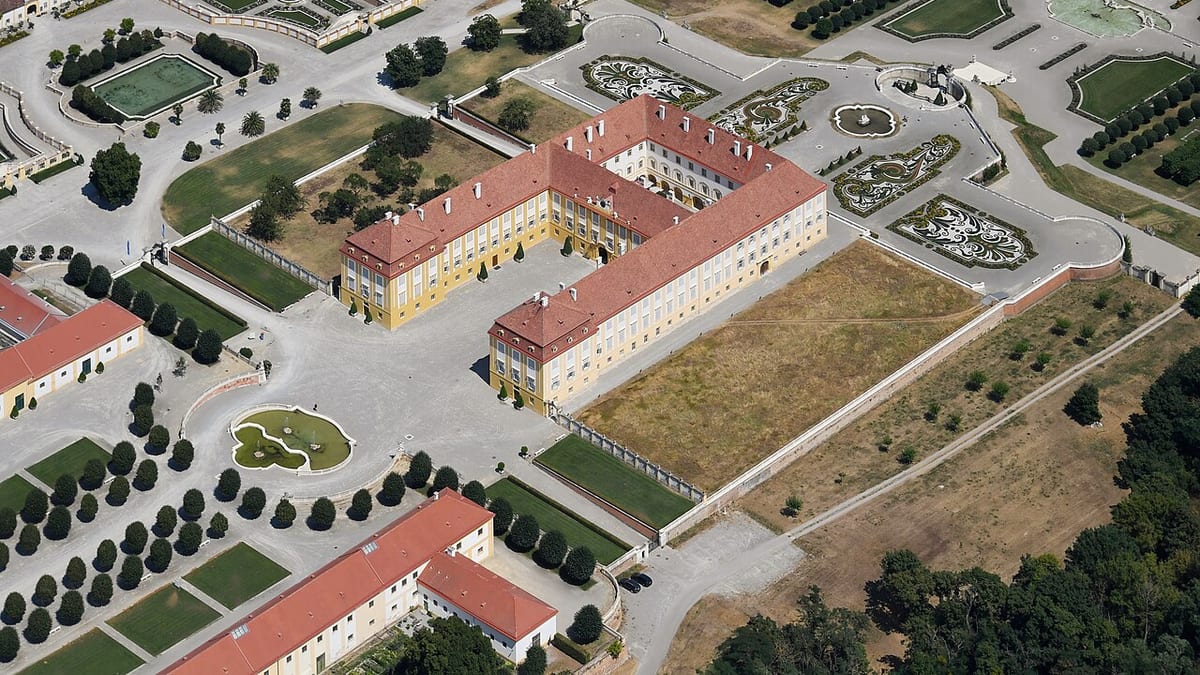
The main reason to travel to Schloss Hof is the relationship between its different parts. The palace supplies the formal rooms and aristocratic setting, the gardens extend that design into the landscape, and the estate farm introduces the practical world supporting an imposing country residence. The ticketing operator describes grounds covering more than fifty hectares, so this is not simply a small palace with a courtyard behind it. [2][3][4]
Decide which element is your priority before arriving. A visitor interested in garden design should reserve the clearest part of the day for the terraces. Someone more interested in interiors can begin indoors and treat the landscape as a contrasting walk. Families may find the farm provides the most engaging anchor, with the palace becoming a shorter supporting visit.
This choice also determines whether the journey feels worthwhile. If two of the three elements genuinely appeal, Schloss Hof offers enough variety to justify a dedicated outing. If only one room or one photograph interests you, a closer attraction may use your limited Vienna time better. There is no need to visit every imperial property to understand that different estates served different purposes.
Read the gardens as a designed sequence
The Baroque garden is arranged across terraces rather than as one level lawn. The operator explains how the reconstructed design draws on historical evidence, including paintings by Bernardo Bellotto. Looking from one terrace to the next helps reveal how architecture, planting and the wider landscape were intended to work together. [3]
Do not hurry directly to the furthest point and then regard the return as wasted walking. Pause at changes of level and compare the view in both directions. A design organized around axes and symmetry can look very different when you turn back toward the palace. The garden rewards that kind of attention more than a checklist of decorative features.
It is also useful to distinguish restoration from an untouched historical survival. A garden is a living, repeatedly maintained construction. The interest lies partly in how the present layout interprets historical evidence, not in imagining that every plant has stood in the same place since the eighteenth century.
In winter, the garden remains part of the estate experience, but its fountains do not operate from November through March. The absence of summer flowers and running water changes the atmosphere rather than making the landscape meaningless. Visit for structure and views in that season, not for the lush display promised by a warm-weather publicity image. [1]
The farm gives mixed-interest groups a useful alternative
Schloss Hof's estate farm is a distinct component of the visit, with animals, traditional breeds and an explanation of estate life. It creates a different pace from the palace rooms and formal garden. For children, it may be the part that makes the entire outing memorable. [4]
Give the farm real time instead of treating it as a reward squeezed into the final minutes. Children who are engaged with animals or a demonstration may not benefit from being hurried toward another formal room. Equally, adults with a strong interest in the palace should agree beforehand how the group will divide its attention.
An animal area is not automatically a petting area. Follow the estate's instructions about feeding and contact, and respect barriers even when an animal seems approachable. Build any activity around the published programme rather than assuming that demonstrations, workshops or special family sessions happen continuously.
For a mixed group, a workable sequence is one indoor visit, a garden section and then the farm, with a meal between the more demanding parts. That is a planning suggestion, not an official fixed circuit. Reverse it when the weather or a booked activity makes another order more sensible.
Winter opening changes the amount you can comfortably do
The estate's published winter arrangement begins on November 3, with opening from 10:00 to 16:00 and last admission at 15:30. December 24 is a closure day. At the research date of November 6, 2026, a late-afternoon arrival would therefore leave little useful time, even though admission might technically still be possible. [1]
Arrive earlier when the visit involves a palace interior and outdoor walking. Last admission is a sales deadline, not a recommendation for an adequate visit. Shorter daylight also affects photographs and the comfort of waiting for a return bus after leaving the grounds.
The official ticket page lists standard estate admission at €24 for an adult and €13.50 for a child in the applicable category. Read the selected date's inclusions, particularly when a special event is involved. Two full-price adult tickets would total €48 before transport, food or separately priced activities; that is a calculation, not a package offer. [2]
The operator and ticket pages do not present every seasonal boundary identically. For a visit near the late-March changeover, use the dated booking product and direct confirmation rather than assuming that a one-day discrepancy has no effect. No unverified future seasonal date is needed to decide whether the estate suits your trip.
Public transport is possible, but the return deserves equal attention
Schloss Hof publishes routes using regional bus 540 from Vienna's Aspern Nord and a train connection to Schönfeld-Lassee followed by the bus. These are useful starting points, but the best connection depends on the day and the actual timetable. Search for the estate stop, not simply the nearest town. [5]
Before buying admission, identify both an outward journey and a realistic return. A route that reaches the estate conveniently but leaves a long evening wait may not be the best choice for a winter visit. Save the stop location and return departure offline, particularly if several similarly named destinations appear in the planner.
Driving gives more flexibility but does not eliminate the walking within the grounds. Comfortable shoes and suitable outdoor clothing matter whichever transport method you choose. Avoid treating the estate's large area as something that can be fully experienced between two tightly timed appointments elsewhere.
Accessibility is specific to the route
The palace has lift access, while parts of the terraced landscape involve stairs or alternative arrangements. The operator describes platform-lift access and Eurokey-related provisions. A general accessible label therefore does not mean every garden route is equally straightforward. [6]
Discuss the exact route you want to take and the equipment you use before travel. Ask which entrance, toilet and connection between levels will be available on the day, especially when the weather may affect outdoor surfaces. A shorter, confirmed route can be more rewarding than discovering halfway through that the intended circuit cannot be completed.
Choose Schloss Hof for an unhurried day in which the landscape and estate life matter as much as the palace. That combination is its distinctive strength. With suitable weather expectations and a sound return plan, it can feel substantially different from another museum visit in central Vienna.