The Albertina is worth visiting for travelers who want a substantial art collection in central Vienna, especially those interested in the Batliner Collection's modern painting or a particular temporary exhibition. Its state rooms add a separate imperial dimension. Choose the exact site and exhibition first: the main Albertina, Albertina Modern and Albertina Klosterneuburg are not interchangeable names for one entrance. [1][3][5]
Start with the art you actually want to see
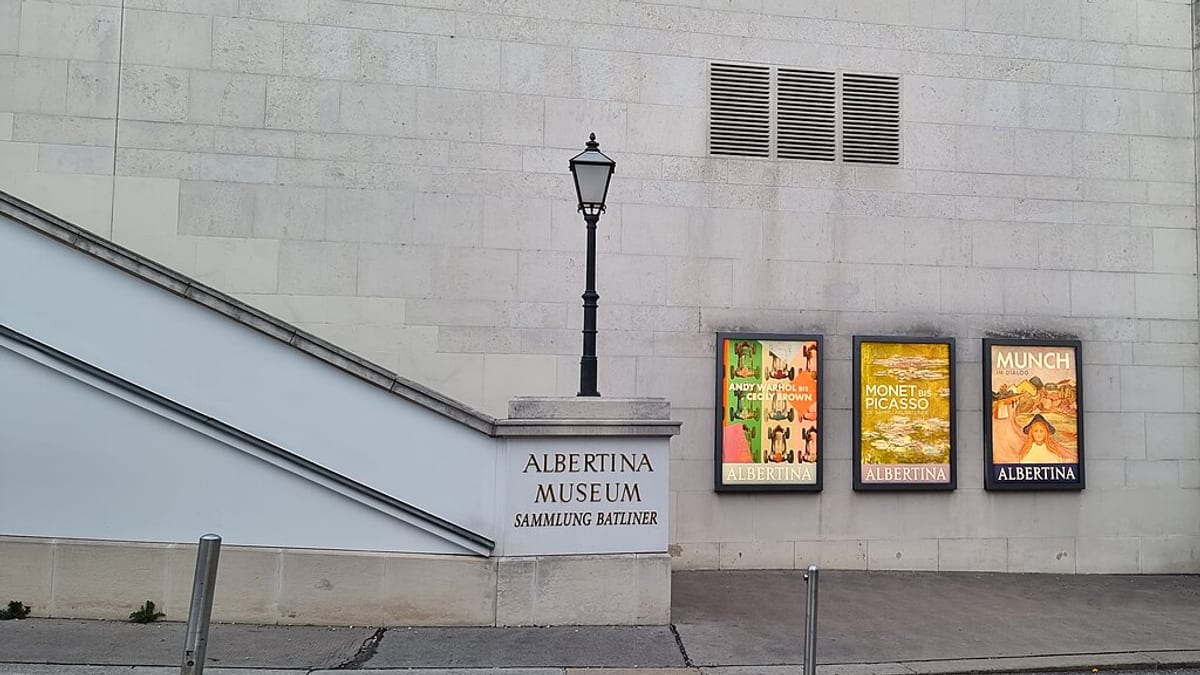
The main Albertina's Monet to Picasso presentation draws on the Batliner Collection and offers a broad route through modern painting. It is a strong starting point for visitors who want more than a single famous work but do not have a specialist exhibition in mind. The collection gives the visit a coherent purpose even when a temporary show's subject is unfamiliar. [1]
Before buying a ticket, look at the current exhibition list and identify one principal reason to go. It might be a painter you know well, a period you want to understand or the opportunity to compare several movements. That choice makes the day easier to plan than a vague intention to "do the Albertina."
Once inside, give a few works more time. Compare how painters use color, the viewer's position or the relationship between figures and background. You do not need to read every label in sequence to have a meaningful museum visit, and completing every room is not the only measure of value.
For someone with limited interest in modern painting, a compelling temporary exhibition may still justify admission. For someone whose main interest is imperial interiors, however, the state rooms should be evaluated on their own merits rather than assuming the entire museum will match that preference.
Do not build the visit around an unconfirmed Dürer display
The Albertina holds an important collection of drawings and prints, including works associated with Albrecht Dürer. But ownership and permanent display are different things. Works on paper are sensitive to light, and the museum explains that such material cannot simply remain on show continuously. [2]
That distinction is crucial when a particular drawing is the reason for your journey. Check the current exhibition information or ask the museum whether the original is displayed during your dates. A famous image on the institution's website does not itself establish that the object is available to view in person.
This is not a minor technicality. A visitor who would enjoy the broader collection can proceed with flexible expectations; a specialist traveling specifically for one work needs a confirmed answer before purchasing nonrefundable arrangements.
Use the same rule for every museum: a collection page identifies what an institution owns, while an exhibition page identifies a more specific display. Even then, individual works can be temporarily absent for conservation or loans. The right question is not only "Does the Albertina have it?" but "Will it be on view during this visit?"
The state rooms offer a different kind of attention
The museum describes twenty Habsburg state rooms, presenting the building's former residential role alongside its use as an art museum. They provide a change of pace from framed works and white-walled exhibition galleries. [3]
Look at how rooms communicate status through scale, decoration and the sequence of spaces. A ceremonial room, a place for private use and a connecting passage had different roles. Understanding those relationships can be more rewarding than trying to remember every decorative name.
For a mixed-interest group, the state rooms can make the visit more balanced. One person may be drawn primarily to painting, another to architecture and interiors. Agree on which parts deserve shared time and whether you will separate briefly rather than requiring everyone to move at the same speed.
Do not treat the rooms as a substitute for every other imperial attraction in Vienna. They are part of this building's story, not a complete account of Habsburg court life. Their value lies in adding another dimension to the art visit without requiring a separate cross-city journey.
Check the location before buying a combination
The main Albertina and Albertina Modern have different locations and exhibition programmes. Albertina Modern is at Karlsplatz 5, while Albertina Klosterneuburg is outside the central Vienna museum cluster and operates seasonally. A ticket or exhibition title containing the Albertina name is therefore not enough to determine where you should go. [5]
The main museum's listed standard admission is €20.90, with a published combination option at €29.90. Visitors under nineteen have free admission under the museum's conditions. Read the current product description to establish which sites, dates and categories are covered. [4]
For a visitor who genuinely wants both included museums, the combination can be useful. For someone who only wants the main collection, paying more for a second site creates no saving unless that second visit actually happens. Compare the difference in cost with the time and attention required, not just the word combination.
Write the exhibition's venue beside its name in your itinerary. This small step prevents a common kind of avoidable confusion: arriving at the main museum with a strong interest in an exhibition being held elsewhere.
A focused visit is usually better than gallery exhaustion
Choose a manageable order. Begin with the exhibition most important to you, while concentration is fresh, then add the collection or state rooms according to your remaining energy. An unfamiliar temporary show can be an enjoyable discovery, but it should not consume all the time reserved for the reason you bought the ticket.
Allow roughly two to three hours as a planning starting point when combining a principal exhibition with some collection and interior viewing. This is an editorial allowance, not a measured average or a requirement. A specialist may want much longer; a focused visitor can have a satisfying shorter visit.
The main museum generally opens from 10:00 to 18:00, with Wednesday and Friday evening opening to 21:00. The other Albertina locations follow their own schedules. An evening visit can fit well after outdoor sightseeing, but only when you use the timetable for the correct building. [6]
Avoid saving every difficult artwork for the final room. Pause, sit where permitted and return to a work that caught your attention. Museums become more memorable when the visit includes reflection rather than a constant search for the next highlight.
Who should choose another attraction instead?
The Albertina may not be the best use of a short stay for travelers who have little interest in its current programme and mainly want a panoramic viewpoint, a broad history museum or outdoor time. Its central location makes it convenient, but convenience alone does not make every collection personally rewarding.
Choose it when the displayed art, the state rooms or a confirmed exhibition gives you a clear reason to enter. Verify any must-see work, buy the ticket for the correct location and leave enough time to look closely. That turns a famous museum name into a specific, satisfying visit rather than an obligation on a city checklist.