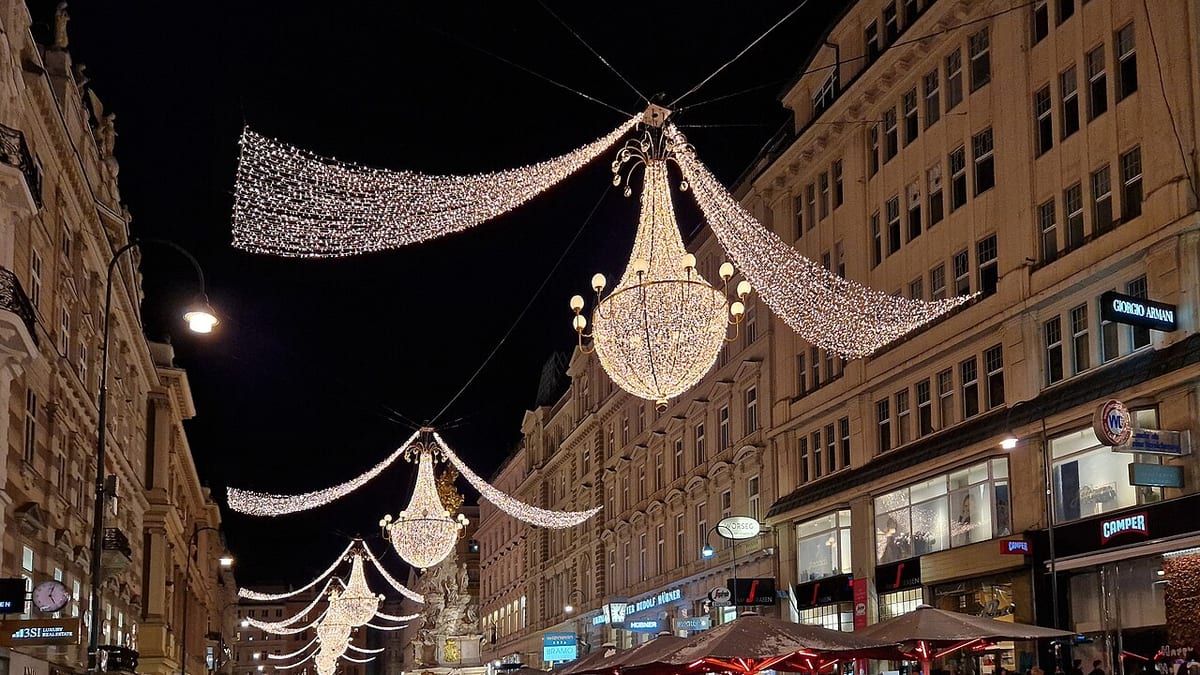
Choose Vienna's Christmas markets around your travel dates before choosing the most appealing photographs. In 2026, Schönbrunn opens on 6 November and continues into January, while Rathausplatz opens on 13 November and several smaller markets finish before Christmas. A late-November visit and a post-Christmas visit therefore need different itineraries, even though both fall within the city's festive season. [1][2][3][4]
Match the market to the actual dates
The most useful first comparison is the operating calendar. It prevents an early-November visitor from expecting every market to be open and a late-December visitor from searching for stalls that have already closed.
| Market | Published 2026–27 dates | Best reason to consider it |
|---|---|---|
| Schönbrunn | 6 November–6 January | Early opening, palace-forecourt setting and a post-Christmas option |
| Rathausplatz | 13 November–26 December | A large central festive visit with separately organized attractions |
| Spittelberg | 13 November–23 December | A smaller-street setting and an evening neighborhood outing |
| Art Advent, Karlsplatz | 13 November–23 December | An emphasis on selected craft exhibitors |
These dates come from the market operators' published information. They describe the market season, not identical daily hours or a guarantee that every individual activity follows the same calendar. [1][2][3][4]
For a first visit in late November, choose one large market and one contrasting smaller one. For a trip after 26 December, start with the markets explicitly continuing into January rather than trying to reuse an early-December itinerary.
Rathausplatz: separate the stalls from the skating calendar
The Rathausplatz market's published 2026 hours are 10:00–22:00 during its main season, with an earlier 18:30 close on 24 December. That makes Christmas Eve a shorter visit, not an ordinary late market evening. [1]
The associated skating operation has a different calendar, continuing to 6 January 2027 and closing on 31 December. Its later end date should not be used to claim that the Christmas market stalls themselves remain open until January. Market shopping and skating are separate activities with separate conditions. [5]
This distinction is valuable for families. Decide whether the main purpose is browsing, food, the setting or skating, then budget and dress for that activity. A public market visit does not automatically include equipment rental or admission to every attraction nearby.
For a quieter-feeling visit, consider arriving earlier rather than making the brightest evening period the only option. That is a planning recommendation, not a measured crowd forecast. The appeal of illuminated stalls must be balanced against the group's tolerance for a busier setting.
Schönbrunn works especially well at the edges of the season
Schönbrunn's market runs from 6 November 2026 to 6 January 2027. Its published hours are 10:00–21:00 until 23 December, 10:00–16:00 on Christmas Eve, and 10:00–19:00 from 25 December onward. The reduced holiday schedule matters when combining the visit with dinner or another attraction. [2]
The palace forecourt gives this market a distinctive setting, but market access should not be confused with admission to the palace interiors or other separately ticketed attractions. Decide which experiences you want rather than assuming a visit to the market covers the whole estate. [2][6]
For an early-November trip, Schönbrunn can provide a festive outing before the other markets in this comparison open. For a post-Christmas trip, it remains relevant after Spittelberg and Art Advent have finished. Those are calendar advantages, not a claim that it is automatically the best market for every visitor.
Allow time for the journey and the scale of the setting. A market stop added after a substantial palace visit can be enjoyable, but the combination may become tiring if the day already contains several major attractions. Choose the main activity and let the other remain flexible.
Spittelberg and Karlsplatz offer different shopping experiences
Spittelberg's 2026 programme runs from 13 November to 23 December, with published opening from 14:00 on weekdays and 11:00 at weekends, continuing to 21:30. That later weekday start means it is not a dependable morning-shopping stop. [3]
Its streets create a different experience from a single large square. Browse at a pace that suits the setting rather than expecting a straight-line circuit with every stall visible from one point. For a meal before or afterward, choose a specific nearby venue instead of assuming every café will have immediate space during the market period.
Art Advent at Karlsplatz runs over the same 13 November–23 December season, with published hours of 12:00–20:00. Its organizer emphasizes a selected craft programme. That makes it worth considering when the purchase itself matters, not only the seasonal atmosphere. [4][7]
Ask exhibitors about materials, production and care when buying a piece. A market setting alone does not establish that every object elsewhere is handmade locally, and a meaningful craft purchase deserves more attention than a quick glance at a "traditional" label.
Build a route with contrast, not repetition
A useful first market day might pair a central large-market visit with a smaller craft-focused stop. That gives variety without spending the whole day moving between similar food stands. Leave room for an ordinary meal, a museum or a warm indoor break rather than treating market browsing as an endurance activity.
Do not schedule four markets simply because they appear close on a city map. Walking between them, crossing busy entrances and stopping to eat or shop take time. The best route is one that leaves enough space to enjoy a purchase or a drink without constantly watching the clock.
For a family, choose one main market and a clear finishing point. Children can enjoy a shorter visit more than a long sequence of crowded stops. Keep the return transport simple and avoid promising every paid attraction before checking its actual operating conditions.
Budget for the whole visit
Separate spending into food, drinks, shopping and activities. That makes it easier to decide where to spend more. A carefully chosen craft object may be the point of the visit, while repeated snack purchases across several markets may add cost without adding much variety.
Read prices and serving sizes before ordering. Where a reusable mug involves a deposit, understand the return arrangement and retain the information needed to reclaim it. Do not assume that a mug can be returned to any unrelated market or that every operator uses the same deposit system.
For shopping, ask how fragile items will be packed and whether they fit the journey home. A delicate ornament that needs a rigid box may be awkward in an already full cabin bag. Buying fewer well-chosen items can be more practical than accumulating objects that become a transport problem.
Christmas Eve and January require their own plan
On 24 December, both Rathausplatz and Schönbrunn have shorter published hours. Complete the market visit earlier and arrange the rest of the evening independently. A market's shortened opening is not evidence that nearby restaurants, shops or transport follow identical hours. [1][2]
After Christmas, use the actual closing dates. Rathausplatz stalls finish on 26 December, while Schönbrunn continues into January; the separate skating calendar does not change that distinction. A correct seasonal itinerary is built from those differences, not from a generic statement that Vienna's Christmas markets run "from November to January."
Sources
- Rathausplatz Christkindlmarkt: visitor dates and hours
- Schönbrunn Christmas market: dates and hours
- Spittelberg Christmas market: official programme
- Art Advent: exhibitor and season information
- Rathausplatz: separate ice-skating calendar
- City of Vienna: Schönbrunn Christmas market
- Art Advent: official market information