Vienna does not have one universal cruise terminal. Your transfer depends on the exact ship station, berth and river channel: Reichsbrücke and other main-Danube docks are different from Wien City on the Danube Canal. Before arranging a taxi or public-transport route, obtain the operator's full departure details and distinguish a ticket office from the place where you actually board. [1][7]
Begin with the booking, not a generic map search
A search for "Vienna cruise port" may identify a plausible waterfront without identifying your vessel. Start with the latest joining instructions and record the ship's name, date, boarding window, station and berth number. If the document only gives a general area, ask the operator for the missing detail.
The port operator publishes a docking schedule, which can help identify a vessel's planned position. Treat that as a useful operational source, not as permission to disregard a later message from the cruise company. Ship movements and berth assignments can change, especially when several vessels use the same station. [2]
For an overnight cruise arrival, confirm whether you are being collected from the ship itself or from a road-accessible meeting point nearby. A driver cannot necessarily stop on the gangway side of a waterfront path. Send the exact meeting location and a working contact number rather than assuming the ship's name is enough.
For a sightseeing cruise, read the boarding deadline as carefully as the departure time. Arriving at the advertised sailing time can be too late if check-in or boarding has already closed. The useful appointment in your itinerary is the required arrival time at the correct pier.
Reichsbrücke: a main-Danube departure area
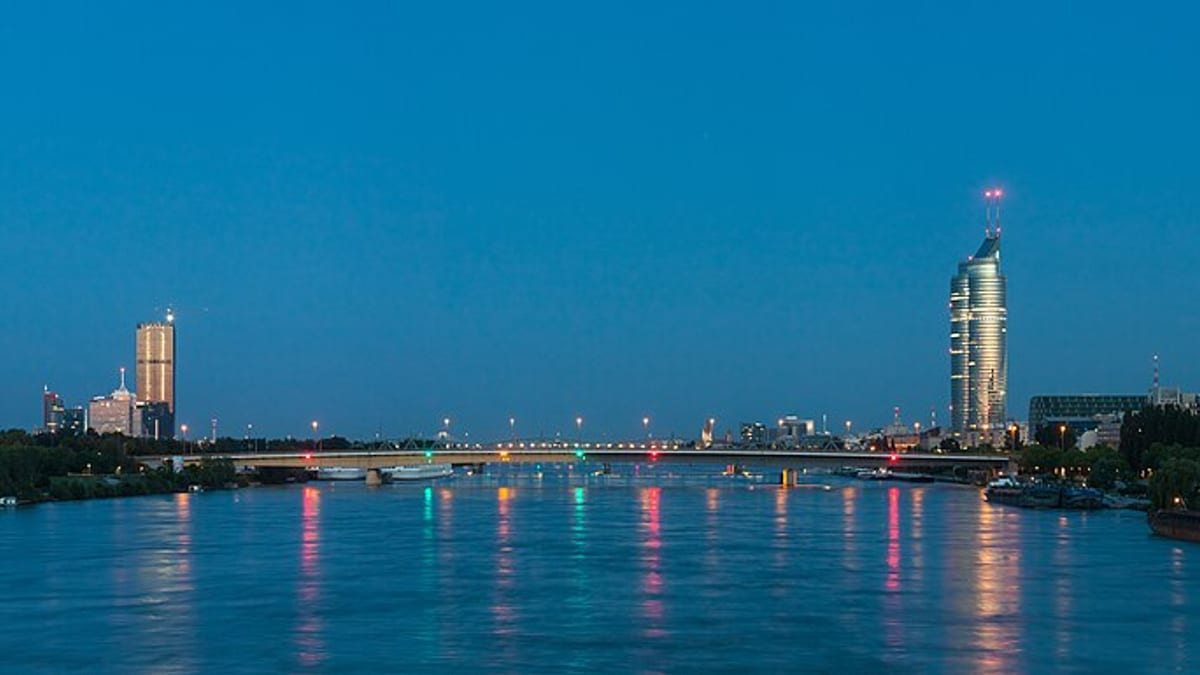
Donauraum Wien lists the Reichsbrücke ship station at Handelskai 265. It is on the main Danube and is used for river operations distinct from the central canal station. The presence of several vessels or landing points makes the berth detail important even after you have reached the correct general location. [1]
DDSG's Danube Panorama Tour information points visitors toward the U1 station Vorgartenstraße for its relevant departure area. That can be a useful public-transport approach, but use the operator's final walking directions rather than assuming the nearest station exit faces the gangway. [3]
With luggage, assess the last section separately from the rail journey. A short map distance may involve a change of level, a long waterfront approach or an inconvenient crossing. Travelers who can comfortably use the U-Bahn without suitcases may still prefer a direct vehicle transfer when joining a multi-day cruise.
Do not confuse the Reichsbrücke area with every address along Handelskai. The port operator also lists the Marina station at Handelskai 343. Those are different destinations, and entering only the street name can leave you on the wrong part of a long riverfront. [1]
Wien City: central, but on the canal
The Wien City ship station is listed at Franz-Josefs-Kai 2 on the Danube Canal. It is associated with central departures including the Twin City Liner and is not the same as a main-river berth near Reichsbrücke. The difference matters because a very convenient central location can create a false assumption about where an overnight river ship will be waiting. [1][4]
For a Twin City Liner journey, the operator asks passengers to be ready for boarding thirty minutes before departure and requires valid travel documents. A cross-border boat trip is not exempt from document requirements simply because it feels like a sightseeing excursion. Check the conditions applying to your nationality and journey rather than relying on a restaurant or tour-booking confirmation. [4]
Use the named ship station as the meeting point, not an arbitrary café beside the canal. Allow time to find the ticket or boarding position and move between the street and waterfront levels. A central address reduces travel distance for many hotels, but it does not eliminate the need for a sensible boarding margin.
When combining a boat journey with a dinner or performance, leave room for disembarkation and the onward walk. The scheduled arrival is the vessel's operational time, not a guarantee that you will already be outside your next venue at that moment.
Nußdorf requires a different transfer plan
The Nußdorf ship station lies farther north, in the Relegasse and Donaupromenade area. It should not be treated as a slightly different name for the city-center canal dock. Vienna's tourist board provides a specific listing for it. [5]
Some cruise operators publish arrival guidance involving tram D or a connection through Heiligenstadt followed by a taxi. Those directions belong to the operator and the particular berth arrangement, so use them as a starting point rather than a universal instruction for every ship. [6]
For a hotel transfer, compare the complete journey. A public-transport route may be straightforward for light luggage and an able walker, while a prearranged vehicle can be more useful for several suitcases, a late arrival or a traveler who needs a step-free transfer.
Write the return pickup point down as carefully as the arrival point. A city excursion is less relaxing when the final task is searching several waterfront positions for a relocated vessel. Confirm the ship's current berth before leaving the hotel or attraction for the return.
Accessibility depends on the vessel and water level
A dock can be reachable while the vessel itself remains difficult to board. The gangway's slope, width, surface and connection to the ship are separate questions from the accessibility of the nearest station or road. Ask the cruise operator about the actual vessel and your equipment before paying for a trip that depends on step-free boarding.
Describe whether you can transfer, fold a chair or manage a short step with assistance. Do not accept a general statement that staff are helpful as a substitute for physical details. Assistance and accessible design are related but not identical.
For an overnight ship, ask about the cabin, bathroom, lift coverage and any deck that can only be reached by stairs. For a short sightseeing sailing, the key questions may instead be the boarding route, toilet and whether the viewing area you want is accessible.
These are planning checks rather than a claim that all Vienna boats have the same limitations. Their purpose is to identify the right operator and vessel for your needs before the transfer is booked.
A simple transfer checklist that prevents expensive mistakes
Keep one compact record containing the latest ship name, station, berth, boarding time and operator contact. Add the exact road meeting point when a driver is involved. Share the same record with every member of the party so that nobody navigates to an old confirmation or a generic port pin.
For an airport connection, work backward from the airline's required arrival and baggage deadlines, then allow for leaving the vessel, reaching transport and the onward journey. Do not build a flight connection around an optimistic estimate of when a gangway will be available. A cruise company's arrival time is not a guarantee against operational delay.
The central lesson is straightforward: confirm the dock before choosing the transfer. Reichsbrücke, Marina, Wien City and Nußdorf solve different journeys. Once the exact boarding point is established, the rest becomes an ordinary route-planning decision rather than a confusing search along the river.