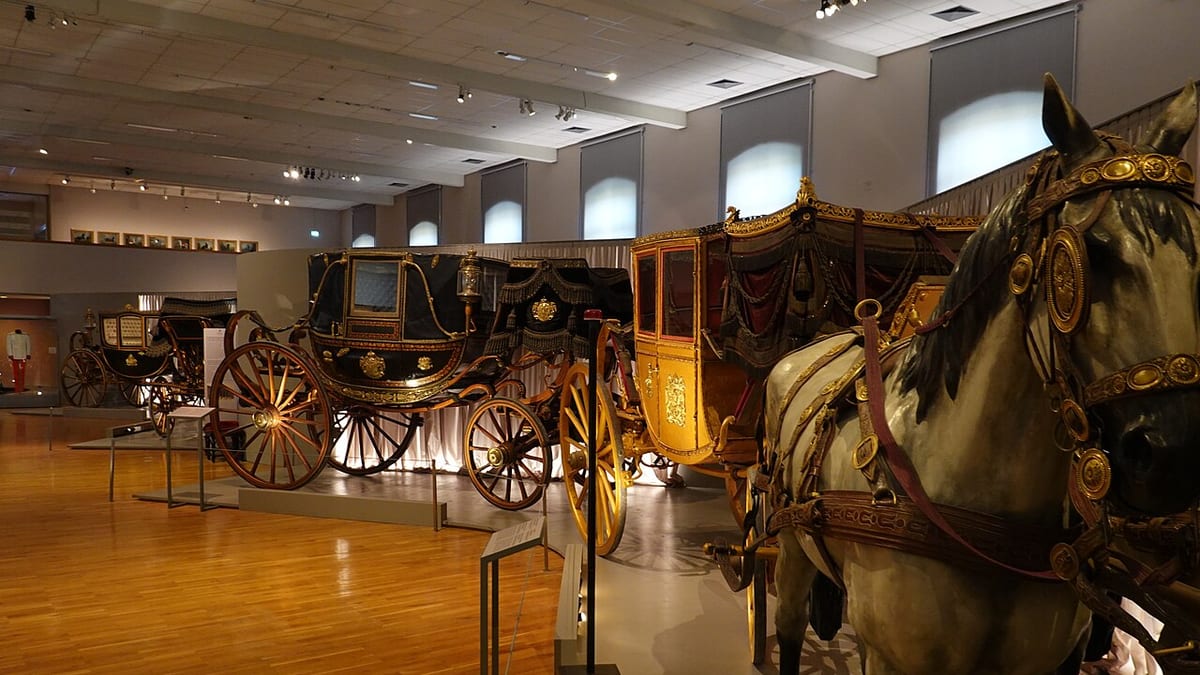
A Vienna Fiaker ride is worth considering when the carriage experience itself is the attraction: a short, shared outing through a historic setting. It is less compelling when your main goal is inexpensive transport or detailed historical interpretation. Compare the fare per carriage, the actual route and the time you will spend riding before treating it as an essential part of every Vienna visit. [1]
Understand the fare before dividing the cost
Vienna's tourism information lists a short ride of about 20 minutes at €60 and a longer ride of about 40 minutes at €105. These are carriage fares rather than prices automatically charged to each passenger. For two adults sharing, the calculated cost is therefore €30 or €52.50 each, respectively, assuming the quoted fare applies to the chosen ride. [1]
That distinction changes the value comparison. A couple should not accidentally double a per-carriage price when budgeting, but neither should a larger group assume it can divide the fare among an unlimited number of passengers. Confirm the carriage capacity and the arrangement for children before deciding the per-person cost.
Ask what the quoted route includes and whether the displayed price is the complete charge for that outing. A standard sightseeing circuit, a special pickup and a privately arranged longer trip need not have identical terms. Get the total clear before boarding rather than discussing it after the ride has started.
The longer option is not automatically better value for every visitor. It gives you more time in the carriage, but it also uses more of the day and costs more overall. Choose it because the additional route interests you, not simply because the price per minute appears lower.
Expect a ride through the city, not admission to its landmarks
A Fiaker circuit provides views from the carriage and the atmosphere of moving through the streets in that vehicle. It does not substitute for entering a cathedral, museum or palace. A landmark named on a route can mean that the carriage passes it or stops nearby rather than that an interior visit is included. [1]
Ask the driver how commentary is provided and whether the language matches your needs. A friendly explanation during a ride is not necessarily equivalent to a structured walking tour led around a particular historical theme. If detailed interpretation is the main purpose, compare the two products directly rather than assuming the carriage includes the same depth.
Consider what you can comfortably see from your seat. A moving street-level view has advantages, but it is different from walking around a building, reading details or choosing your own photograph position. Travelers who enjoy stopping frequently may prefer to explore the area on foot and use the carriage only as a separate short experience.
The route can also be affected by the streets available at the time. Agree on the important elements before departure, while recognizing that a city ride is not a guarantee that every advertised view will be unobstructed by traffic, events or temporary works.
Use the stands that fit your existing route
The tourism board identifies traditional Fiaker stands around central locations including Stephansplatz, Michaelerplatz, Albertinaplatz, Petersplatz and Burgtheater. Choose a convenient starting area rather than making an unnecessary journey across the center solely to find a carriage. [1]
A sensible place for the ride is between two nearby activities or at the end of a period of walking. It can provide a change of pace without becoming the logistical center of the whole day. Avoid placing a tightly timed museum entry immediately afterward unless you have allowed a comfortable transition.
For a special occasion, contact a provider about a reservation and the exact arrangement rather than assuming a street stand can supply any requested time, vehicle or decoration. A spontaneous tourist ride and a bespoke booking are different transactions.
Keep the meeting details specific. A large square can contain several gathering points, and "near the palace" is not precise enough when you have reserved a departure. Save the confirmation and identify the operator as well as the location.
Horse welfare and hot-weather restrictions matter
Vienna publishes rules and information concerning Fiaker horses, including hot-weather restrictions. The city's guidance identifies a 35°C threshold associated with suspending operation under the applicable conditions. Travelers should not interpret a canceled or unavailable ride in extreme heat as something to negotiate around. [2]
The existence of a regulation does not answer every ethical question a visitor may have about animal-drawn tourism. Decide whether you are personally comfortable with the experience. Someone who would spend the ride worrying about the horses is unlikely to get good value from it, regardless of the route or price.
Do not approach or feed the animals without the driver's permission. The carriage stand is a working environment, not an unrestricted petting area. Keep children close and follow the instructions given around the horses and vehicle.
Weather also affects passengers. A carriage ride on a cool or wet day may feel very different from the sunny version in promotional images. Ask about the vehicle's cover and the operator's cancellation arrangement when booking in advance, rather than assuming that every unfavorable forecast creates a refund right.
Reduced walking does not guarantee easy boarding
A carriage can reduce the amount of walking during the ride, but that does not establish that boarding is straightforward for every traveler. Ask about the step height, assistance and any mobility-aid storage needed. A general description such as "suitable for older visitors" is less useful than a clear answer about the actual transfer into the seat.
For a wheelchair user, discuss the particular vehicle and whether any transfer is required before reserving. Do not rely on a photograph of a broad seat to infer accessible boarding. The right answer may be a different transport option with confirmed access.
For children, ask about the seating arrangement and supervision expected. The fact that a ride is short does not remove the need to understand how the group will be seated safely and comfortably.
When another option is better
Choose a walking tour when your priority is explanation and the ability to stop at details. Choose ordinary public transport when your main need is to reach another district. Choose an independent walk when you want to set the pace and spend most of the time inside attractions rather than moving between them.
A Fiaker makes the most sense when the carriage is a deliberate purchase in its own right. It can be a shared celebratory moment or a different perspective after a morning on foot. It should not be sold to yourself as the cheapest way to see the city or as a replacement for every other kind of sightseeing.
Before boarding, settle the fare, route, duration and practical seating questions. Once those are clear, enjoy the ride for what it is. A well-chosen short outing is better than an expensive longer one purchased under assumptions that the driver and passengers never actually agreed on.