For most independent visits, start by comparing a train from Vienna to Krems with the onward regional bus to Dürnstein. Seasonal railway and boat services can make the journey more scenic, but their calendars and stopping points need separate attention. Decide whether you want transport to the town or a longer sightseeing journey before buying a combination that consumes most of the day. [1] [2] [3]
The straightforward starting point is Krems
Krems is the useful regional connection to investigate for a Vienna–Dürnstein outing. Official Krems arrival information describes rail links from Vienna, while VOR provides the regional transport information for continuing through the Wachau. Search the complete trip for your actual date rather than relying on one train duration quoted in isolation. [1] [2]
The Vienna departure point matters. Services on the relevant corridor can involve Franz-Josefs-Bahnhof and other stops, so begin the search from your hotel area or the station you can comfortably reach. A train that looks slightly quicker can be less useful if it requires an inconvenient cross-city transfer first.
Once in Krems, account for the transfer to the regional service. Identify the bus stop and the correct direction before assuming the connection is immediate. A sensible margin is especially helpful when you are unfamiliar with the station area or carrying luggage.
For Dürnstein, select the stop that fits the town visit you intend. The regional timetable is more useful than simply entering the town name into a map and assuming every result delivers you to the same entrance. Save the return stop as well as the arrival point.
Regional tickets do not automatically cover the whole journey
VOR's Wachau information describes a regional day-ticket offer at €13 with defined local validity. The important point is its scope: a regional Wachau product should not be assumed to include the train from Vienna or every scenic transport service carrying the Wachau name. Read the actual inclusion list. [2]
This is where attractive package language can create a misleading budget. A ticket may cover useful local buses and specified ferry arrangements while leaving the longer journey from Vienna or a separate railway experience outside its validity. Special promotions can also have their own dates and conditions.
Compare the total cost of the route you will use. If you only need one outward and one return local journey, inspect the relevant single-ticket options as well as the day product. If you intend to make several local stops, the day arrangement may offer a different kind of convenience.
Do not buy a regional ticket merely because it looks like an all-purpose solution. Write down the actual legs of the day and match each one to a valid ticket. That small exercise is more reliable than assuming one pass covers every vehicle in the valley.
The Wachau Railway is a seasonal experience
The Wachau Railway publishes its own timetable and operating calendar. Use the railway's actual service dates and stops when considering it as an alternative to the bus. A scenic railway promoted for the visitor season should not be assumed to run at the same frequency throughout winter. [3]
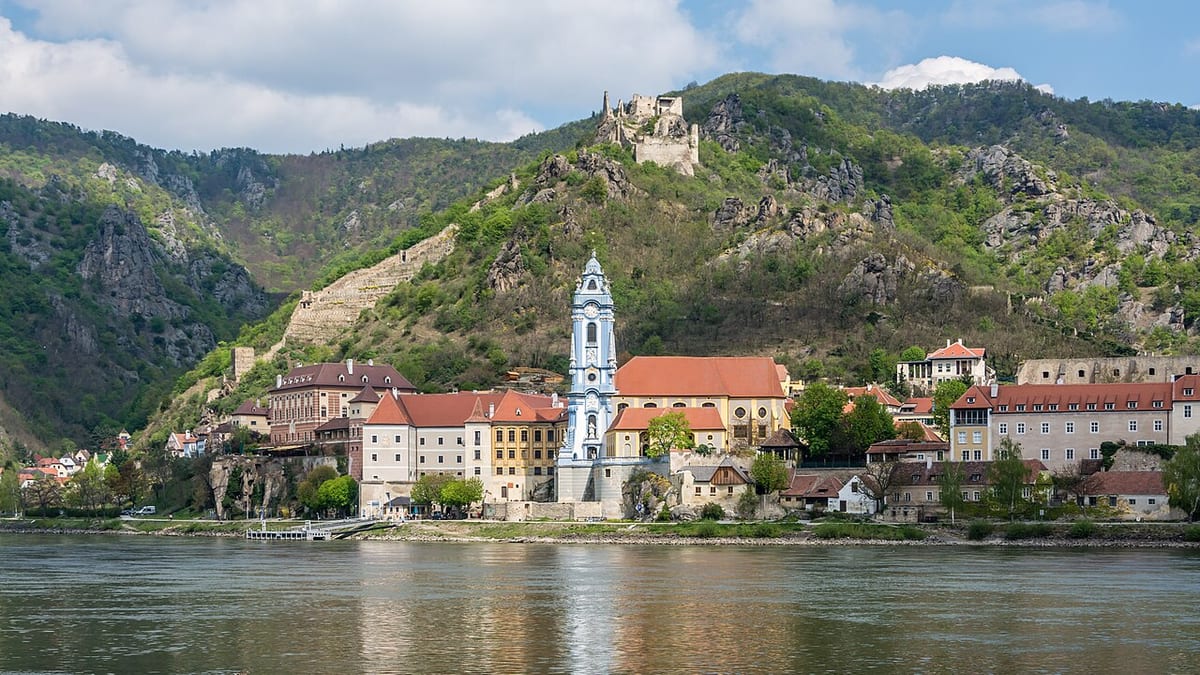
Dürnstein-Oberloiben station also needs to be understood as a railway arrival point rather than an automatic drop-off at every attraction in the old town. Allow the final walk and use the destination address to decide whether the train fits your plan better than the bus.
A further geographical trap concerns the railway's western end. Emmersdorf is not Melk itself: the two places are on opposite sides of the river. A route described casually as a journey "toward Melk" can therefore conceal an additional connection. Check the actual station name rather than following a famous destination label. [3]
Advent departures, when offered, are separately dated products. Their existence does not prove that the regular seasonal service operates every day in the surrounding weeks. Choose them as a specific excursion, not as a substitute for reading the normal timetable. [4]
A boat can be the outing rather than the quickest connection
DDSG's Wachau information provides the appropriate source for river-service dates, landing points and ticket types. A boat journey is appealing when you want to spend time seeing the valley from the water, but it is not automatically the most efficient way to maximize time in Dürnstein. [5]
Check whether the ticket is one-way, return or part of a package, and whether the departure times leave a useful interval in the town. A long outward journey followed by a fixed early return can create less sightseeing time than a simpler train-and-bus route.
Also distinguish a Wachau river service from a direct everyday boat connection from Vienna. The regional cruise you see advertised may require reaching its departure town by rail or another means first. That initial journey belongs in both the time budget and the cost comparison.
Choose the boat when the journey itself is one of the day's main attractions. Choose the more direct land connection when the priority is the town, an abbey visit or a walk that requires a substantial block of time.
Do not turn the Krems–Dürnstein walk into an accidental transfer
The Wachau World Heritage Trail's Krems–Dürnstein stage is approximately 12.4 kilometers, with an indicative walking duration around four and a half hours. It is a genuine walking activity, not a short replacement for a missed bus. [6]
If you want to hike, make that the central plan and arrange transport around it. Include time for pauses, photographs and any meal, and examine the ascent and surface rather than looking only at the kilometer total. A published route estimate is not a promise that every traveler will finish in that time.
A one-way hike followed by public transport can be a coherent day. A long hike combined with a full town visit, a boat trip and several other stops is a much more demanding proposition. Remove an activity rather than assuming that every transfer will run at the most optimistic possible speed.
Within Dürnstein, distinguish the relatively compact town visit from an uphill walk to a viewpoint or ruin. A small town can still contain an activity that requires additional effort and time. Decide which part of the visit matters before filling the return schedule.
Driving solves some problems and creates others
Dürnstein's municipality publishes parking information, which is the appropriate source for designated parking and local arrangements. Do not assume that driving allows you to park beside every old-town attraction or that an appealing side street is available to visitors. [7]
A car can make a wider regional itinerary easier, but it also requires attention to parking, the return drive and the group's plans around food and drink. For a single-town day from Vienna, public transport may provide a simpler experience than taking on those tasks.
Whichever route you choose, identify the return before departure. Save the intended connection and a reasonable backup, then give the town enough time to be more than a gap between vehicles. The best Vienna–Dürnstein route is the one that serves your actual day, not the one with the most impressive list of transport modes.