For Vienna to Melk, start with a rail journey to Melk station and plan the abbey visit before adding a river cruise or another Wachau town. Connections through St. Pölten can be useful, but the complete journey matters more than the fastest first train. Winter access is not simply "guided tours only" every day: the abbey publishes different weekday and weekend arrangements. [1] [2]
Book to Melk, not merely toward the Wachau
Melk Abbey's visitor guidance identifies regular rail connections from the Vienna and St. Pölten direction and recommends the official ÖBB and VOR planners. Search from the Vienna station that suits your accommodation to Melk, allowing the planner to show whether a change is required. A long-distance train heading west is not automatically a train that stops at Melk. [1]
Compare the full itinerary. A fast first leg to St. Pölten can be useful when it connects well with the regional service; it is less persuasive when a long wait erases the advantage. A slower-looking journey with fewer changes may be preferable with luggage, children or an uncertain arrival time at the departure station.
Do not choose a departure simply because an online guide names Wien Hauptbahnhof or Westbahnhof. The correct station belongs to the specific service you buy. Read both the station name and the transfer point on the booking, then save the itinerary so that a ticket code is not the only information available on your phone.
Ticket flexibility deserves a separate comparison. ÖBB distinguishes the validity conditions of its standard and discounted products, and a seat reservation is not the same purchase as a travel ticket. A concrete connection displayed during booking does not by itself establish that every fare has identical train restrictions. Read the fare conditions before choosing. [3]
The abbey visit starts after the station
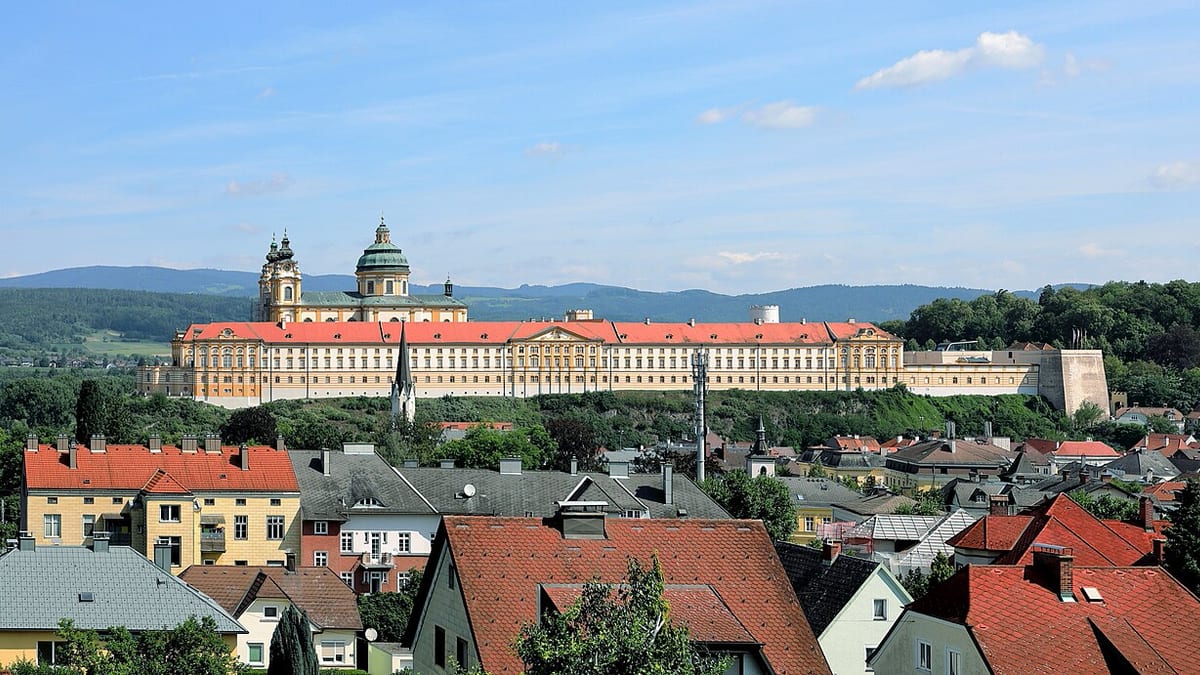
The abbey's directions describe a pedestrian approach through Melk's town center. That is part of the visit, not an inconvenience to erase from the schedule. Leave time to reach the entrance, find reception and collect any reserved tickets instead of placing a guided tour immediately after the train's arrival. [1]
For planning, allow a generous arrival margin rather than trying to calculate the walk to the minute. Travelers who need step-free access should obtain the current accessible approach directly from the abbey. A route that works for a fit pedestrian is not automatically suitable for a wheelchair or someone who finds slopes difficult.
A useful sequence is train, town approach, abbey, lunch and a final short walk before returning. That order protects the timed activity while keeping the rest of the day flexible. Reverse it only when the available tour is later or the weather makes an outdoor pause particularly worthwhile.
If the abbey is the main reason for the trip, book that component first. You can often adjust a meal or shorten a town walk more easily than replace a missed guided visit. This is especially important outside the period when independent access has broad opening hours.
Winter rules are more nuanced than many summaries suggest
The official schedule permits visits with or without a guide through 1 November 2026. From 2 November to 6 January 2027, ordinary working weekdays use guided access, while weekends, public holidays and the listed Christmas-holiday period have broader independent visiting arrangements. From 7 January to 5 March 2027, the published schedule returns to guided-only visits. [2]
This difference changes which train to choose. A weekday winter arrival should be coordinated with an offered tour rather than merely with the building's broad opening period. For a weekend, an independent visit may provide more flexibility, but the published last-admission time still matters.
The same page lists general winter tours at 11:00, 13:30 and 15:00, with a specific Christmas Eve exception. These are the operator's published arrangements, not a guarantee that every language or private group option is available without reservation. Select the date and language together when confirming a place. [2]
Do not carry the summer garden experience into a winter description. The abbey's visitor FAQ separates the seasonal park from the interior visit and recommends allowing substantial time for the full ensemble when its components are open. The library is also undergoing restoration, so photographs of an unobstructed room should not be treated as a contractual preview. [1] [2]
What to budget beyond the train
The published adult admission is €16, with a €4 supplement for the standard guided visit. That makes €20 for one adult taking that combination, or €40 for two, before transport, meals or other purchases. This is a calculation from the listed components, not a bundled day-trip quote. [2]
Compare the fare for the actual travel date rather than adding an advertised rail "from" price to those figures. Include any Vienna station transfer not already covered by your ticket or pass. A cheap outward train does not establish the total cost when the return uses a different product.
A guided excursion can be reasonable when it includes a coherent transport plan and the specific visit you want. Compare inclusions rather than headline prices: admission, a licensed guide, a cruise and free time are not interchangeable. An excursion that only stops outside the abbey is not equivalent to an interior visit, however attractive the vehicle or itinerary photograph.
For independent travelers, the main advantage of keeping the day simple is flexibility. You can choose the pace of lunch and the walk through town without paying for attractions that were added mainly to make a package appear larger.
Add the Danube only when the connections genuinely work
Melk's position in the Wachau makes a river journey tempting, but a train-and-boat combination needs its own timetable. A cruise is not a year-round substitute for the return train, and a scenic departure in one direction does not prove that the reverse connection exists when you need it. The abbey links to rail-and-cruise combinations, whose operating dates and inclusions must be read as a separate product. [2]
For a first visit, choose one principal addition rather than trying to combine Melk, Dürnstein, Krems and a leisurely cruise in a short winter day. Calculate backward from the final transport connection. If the extra activity forces you to rush the abbey, it is not improving the trip that brought you here.
A practical test is to write down the non-negotiable times: abbey entry, boat departure if booked, and return train. Everything else must fit around those without assuming perfect transfers. Leave the optional town walk or café stop as the flexible element rather than shortening a paid tour halfway through.
An overnight stay becomes more appealing when the real aim is to explore several Wachau places instead of making a focused excursion from Vienna. For a single-day visit, a well-matched train and a properly timed abbey visit are already a complete plan. The trip does not need a second transport mode to justify itself.
Sources
- Melk Abbey: practical visitor questions and arrivalwww.stiftmelk.at
- Melk Abbey: seasonal opening, prices and tourswww.stiftmelk.at
- ÖBB: booking, ticket validity and reservationswww.oebb.at