For Vienna to Salzburg, take a direct train and choose the operator according to your Vienna departure station, fare conditions and preferred arrival time. ÖBB and WESTbahn are separate ticketing choices, not interchangeable branding. A day trip is possible, but an overnight stay becomes more attractive when you want an evening performance, a slower visit or excursions beyond Salzburg itself. [1] [2]
Start with the Vienna station, then compare the fare
ÖBB advertises direct services between Vienna and Salzburg, while WESTbahn's Salzburg route information identifies Wien Westbahnhof as its Vienna departure. Read the exact itinerary when comparing bookings: a lower fare is less useful if reaching its departure station adds an awkward transfer from your hotel. [1] [2]
For accommodation near Wien Hauptbahnhof, start with the ÖBB connection search. For a base near Westbahnhof, WESTbahn deserves an early comparison. Neither rule is absolute. A useful departure, a seat suitable for your party or a more flexible ticket may outweigh a small difference in station access.
WESTbahn's published route guide describes a journey of around two and a half hours for its example service. Treat that as a useful indication of the scale of the trip, not as a door-to-door promise or the duration of every departure. Your hotel transfer, boarding margin and onward travel in Salzburg sit outside it. [2]
A practical comparison uses four columns: station, scheduled departure and arrival, total fare, and change or cancellation conditions. That is more revealing than sorting only by the cheapest price. For a return trip, repeat the exercise in the other direction; the operator that suits the outward journey need not offer the best return.
Cheap tickets can be good value without being flexible
ÖBB describes Sparschiene as a limited-availability, train-specific product. Its low advertised entry price is therefore not a standing fare that every traveler can buy for any departure. Choose the train first and read the conditions of the particular fare offered for that date. [3]
WESTbahn's WestSuperpreis also has its own conditions and includes a seat reservation according to the operator's fare page. Do not assume that the conditions of one company's discounted ticket carry over to the other. A comparison is only meaningful after accounting for what the displayed price includes. [4]
The biggest practical distinction is often between a fixed plan and an uncertain one. If you are already staying in Vienna and can reach the station comfortably, committing to a particular morning train may be sensible. If you are arriving by air and buying a separate onward rail ticket, a tight fixed departure creates a different risk.
Consider the return in the same way. A train-specific evening fare can keep a day-trip budget predictable, but it also gives the day a firm finish. A more flexible product can be worth paying for when you genuinely want to decide later, provided its rules cover the service you eventually take.
A seat reservation should be checked, not assumed from the existence of a ticket. ÖBB's booking guidance separates tickets and reservation-only purchases. Confirm that each traveler has the required travel entitlement and that the seat booking matches the correct train, date and class. [5]
Arrival in Salzburg is the start of the city visit
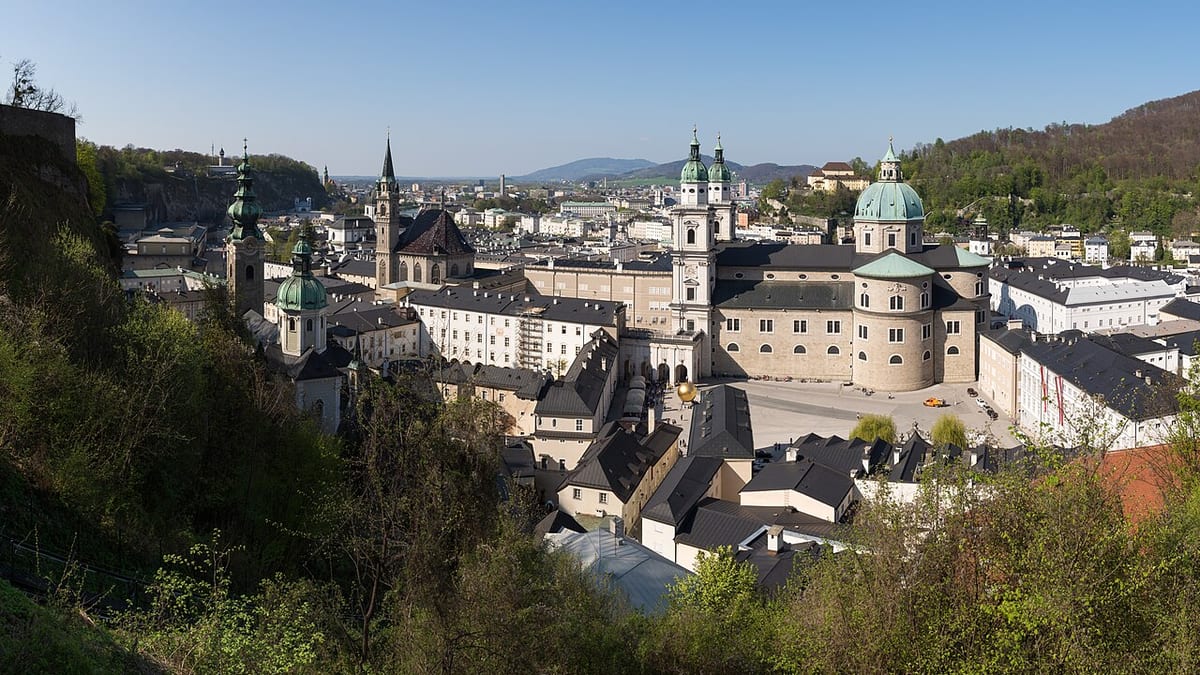
Salzburg Hauptbahnhof is not the middle of the pedestrian old town. WESTbahn's suggested walking approach runs via Rainerstraße and Mirabell toward the Salzach and the historic center. That can be an enjoyable opening to the visit when the weather and luggage allow, rather than an obligatory transfer to complete at speed. [2]
With heavy bags, a mobility limitation or a timed entry, use the city transport information instead of assuming that walking is always the more authentic choice. Salzburg's official tourism service provides the local transport overview and notices of route changes. The appropriate stop depends on the actual hotel or attraction, not merely on the words "old town." [6]
One current distinction matters to overnight visitors: the Guest Mobility Ticket is issued to overnight guests in the province of Salzburg and covers eligible public transport during their stay. It is not a universal free city ticket for everyone arriving from Vienna, nor does it turn the entire Vienna–Salzburg journey into a complimentary ride. [7]
Ask your accommodation about issue and validity before buying additional local travel. Then compare an attraction card on the basis of attractions you will actually enter rather than paying twice for transport coverage you already have. A pass with many inclusions is only useful when the itinerary makes use of them.
Is Salzburg realistic as a day trip?
A day trip works best when the aim is a focused introduction. Choose a central walking route and one substantial paid visit, leaving time for lunch and the approach back to the station. Trying to include the old town, several museums, a long guided excursion and an evening concert is a different proposition.
To test your plan, start with the booked arrival and subtract the time needed to reach your first activity. At the other end, reserve the station approach and a boarding margin before the return train. The remaining interval is your usable city time. Do not call the entire gap between trains sightseeing time.
For example, a five-hour sightseeing window is not five hours available for an attraction itinerary once lunch, walking and a weather break are included. Treat those as legitimate parts of the day, not failures of efficiency. A short list of priorities helps you preserve the most important experience if the outward journey changes.
Traveling with children or someone who tires easily strengthens the case for fewer commitments. A good plan can contain an unbooked café break and still feel complete. It does not need to justify the rail fare by maximizing the number of entry tickets purchased.
An overnight stay is the better editorial recommendation when an evening event is central to the trip. It removes the need to choose a performance according to a hurried return connection and allows the station transfer to happen the following day. Price the additional accommodation against what that extra time is actually worth to you.
When another transport mode makes sense
Driving can be useful for a wider itinerary with rural stops, but compare the complete cost: rental, parking, fuel and the effort of collecting and returning the vehicle. For a city-center-to-city-center journey with direct trains, the car should solve a specific problem rather than be the default.
A coach or organized excursion should be judged by its exact departure point and inclusions. Hotel pickup, admission and a guided visit can add genuine value, but a long list of places seen through a window is not the same experience as time to explore one place well.
For most independent travelers, the clearest choice remains a direct train with the right ticket conditions. Buy the journey you can comfortably make, choose a manageable Salzburg itinerary, and keep enough time for the final transfer. The most successful version of this trip is not necessarily the one with the earliest departure and latest possible return.
Sources
- ÖBB: direct Vienna–Salzburg connectionswww.oebb.at
- WESTbahn: Salzburg routes and station informationwestbahn.at
- ÖBB: Sparschiene fare conditionswww.oebb.at
- WESTbahn: WestSuperpreis conditionswestbahn.de
- ÖBB: booking, ticket validity and reservationswww.oebb.at
- Salzburg tourism: public transport and workswww.salzburg.info
- Salzburg tourism: Guest Mobility Ticketwww.salzburg.info