
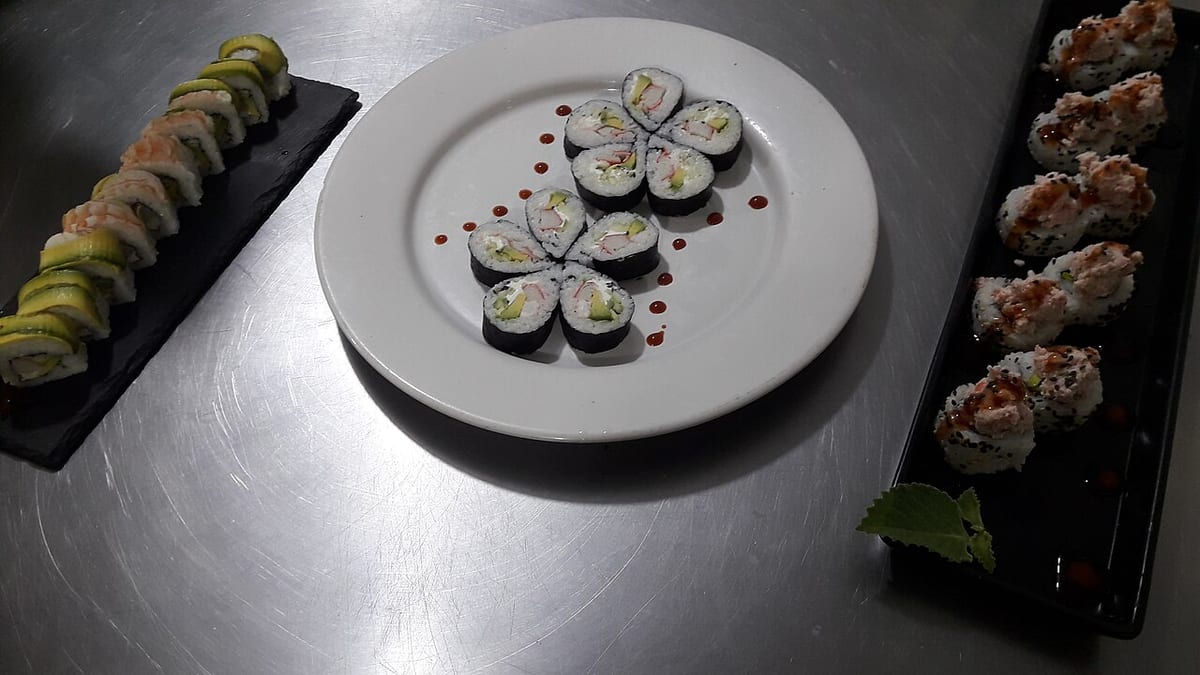
For sushi in Vienna, start with the occasion: Nihonbashi offers a useful weekday-lunch comparison, Natsu requires careful reading of its displayed price conditions, Mochi suits a broader shared-dish meal, and SHIKI's different formats need to be distinguished before booking. These choices are based on published menus and practical fit, not a claim of firsthand tasting or a universal ranking. [1] [2] [3] [4] [5]
Compare a complete lunch with a complete lunch
A sushi price means little without knowing the portion and service conditions. One restaurant may list a set with soup and accompaniments, another an individual roll, and another a limited promotion. Begin by identifying what you would actually order and whether you will eat in, collect it or request delivery.
This matters particularly in Vienna's lunch market. A weekday offer can be excellent value for someone visiting on Tuesday and irrelevant to someone planning a Saturday dinner. Takeaway exclusions and holiday conditions are also part of the offer, not small print to ignore.
The easiest comparison is the likely full meal: the sushi or set, any additional food needed, a drink and any applicable extra charge. Do not compare the smallest entry on one menu with a substantial set on another and conclude that the restaurants occupy the same price category.
Nihonbashi: the weekday conditions make the difference
Nihonbashi's published menu lists lunch options including Ume Zen sushi at €19.50, Hana at €24 and a sashimi lunch at €21.50. The menu's lunch conditions matter: the offer is for the stated weekday service, excludes public holidays and is intended for dining in rather than being assumed available for takeaway. [1]
For two diners choosing the €19.50 option, the food total is €39 before drinks or other additions. Two €24 sets total €48. Those calculations help establish a realistic comparison, but they do not make the dishes identical: read the composition and choose the one that fits your appetite and preferences.
A lunch set is useful when you want the ordering decision to remain simple. It can also be a better use of a short midday break than constructing a meal piece by piece. Reserve the time to eat comfortably rather than treating a seated set as something that can be consumed on the way to another attraction.
Check the actual day against the conditions before arranging the rest of the itinerary. A public holiday falling on a weekday is exactly the sort of exception that can make a seemingly obvious lunch recommendation fail.
Natsu: do not mistake a promotional display for a universal price
Natsu's website presents several locations and menu offers, including displays where more than one price can appear beside an item. The important task is to establish which price applies to your branch, channel and order, rather than assuming that the lowest visible figure is a permanent dine-in price everywhere. [2]
Ask about the applicable offer when the presentation is unclear. A promotion may depend on collection, online ordering or another condition. Confirming that point before payment is more useful than treating an attractive screenshot as an unconditional promise.
Read the ingredient list for vegetarian selections as carefully as for fish. A set described around vegetables can still include egg or another ingredient that does not fit a vegan diet. The category name is a starting point for discussion, not a substitute for the actual composition.
Natsu can be a practical option when a nearby branch fits your day and the current offer matches the meal you want. Its usefulness depends on those details, not merely on appearing cheaper in a search result.
Mochi: choose it for the whole style of meal
Mochi's official information identifies its restaurant and related offerings. The original Praterstraße restaurant should not be confused automatically with every other venue or ordering concept associated with the same group. Use the specific restaurant's menu and booking details for the experience you intend. [3]
This is a useful choice to investigate when the group wants sushi alongside a wider selection of dishes rather than a meal consisting only of a predetermined sushi box. Shared ordering can provide variety, but it also needs a little coordination so that the table does not accidentally buy several similar dishes.
Agree on the budget and appetite level before beginning. A series of small plates can become a substantial dinner, both in quantity and cost. Start with a coherent selection and add more if needed rather than ordering every appealing item at once.
When timing matters, tell the restaurant about a later commitment and ask whether the intended meal fits. Do not assume that a lively shared-dish dinner will follow the same pace as a fixed weekday lunch set elsewhere.
SHIKI and SHIKI Omakase are not interchangeable bookings
SHIKI's restaurant information and the separate SHIKI Omakase pages describe different dining formats. The omakase experience is a small, structured setting, with its own menu and reservation conditions. A booking at one should not be assumed to reproduce the other. [4] [5]
The omakase information is particularly important for dietary restrictions. Its published conditions describe limitations on adaptations, including requirements that can make it unsuitable for some vegetarian, vegan or allergy-related needs. Read those conditions before paying rather than assuming that a high price guarantees unlimited customization. [5]
Choose a fixed-menu experience because you want to follow the chef's sequence and give the evening time. It is a poor match when different diners need to order independently, someone wants only a small meal or the group must leave quickly for another reservation.
For a special occasion, ask what the stated price includes and what remains additional. Drinks, pairing options and extras can change the final budget. A clear written understanding is more useful than assuming that the word "omakase" describes the same package at every restaurant.
Match the restaurant to the actual group
A mixed group may be happiest somewhere that offers both sushi and substantial cooked dishes. A diner interested in individual nigiri may prioritize a specialist menu, while another may simply want a convenient lunch at a predictable cost. Discuss those preferences before choosing a restaurant by reputation alone.
For an allergy, contact the restaurant directly and explain the ingredient and the need to avoid cross-contact. For a preference, be equally clear but do not describe it as a medical requirement. Precise information helps the kitchen give a useful answer about what can be prepared.
Choose Nihonbashi when the weekday lunch conditions fit, Natsu when the verified branch offer suits your budget, Mochi when a broader shared meal appeals, and the appropriate SHIKI format when the occasion and dietary conditions align. The best sushi decision is the one that compares equivalent meals and understands the booking before the first plate arrives. [1] [2] [3] [4] [5]